

TIME TO PAY THE PIPER
- Jan 16
- 4 min read
There's an old saying about paying the piper, implying you've been avoiding the inevitable, and it's time to face reality and pay your debt. In the context of our weather, it means we've been living on easy street and that time has come and gone. The second half of January will definitely have the true look and feel of winter. Find the bullet, you're gonna need to bite it. Here's what we're facing:
Occasional snow showers this weekend, especially near and north of I-80.
Accumulations of 1 to perhaps 3 inches in spots, heaviest north.
Strong cold front Friday afternoon with high winds, brief but intense snow squalls possible
Arctic air Saturday that intensifies Sunday night and Monday
Cold, (potentially snowy) 2-week period ahead
I referenced above that we've been living on easy street. Here's the proof. These are the Quad City temperatures for January so far, keep in mind they are coming at the coldest time of the year. Notice we just went through a 12-day stretch in yellow where there was not have a high below 30 degrees. Through Thursday, the average January temperature is 33.5 degrees (highs and lows combined). That's 11.1 degrees above normal per day!

As early as Monday morning, the EURO depicts readings of 18 to 27 below normal from southwest to northeast. Now that's a change.

Wind chills of 20-27 below zero are shown from I-80 north. Have you found the bullet yet!

Getting back to the coming weekend, after some morning light snow in the north, we actually have another above freezing day to look forward to Friday with highs reaching 34 to 40 from north to south. The warm air advection that produced snow squalls Thursday night will be in place long enough to provide the warmth. However, the front slides southeast in the afternoon turning winds to the northwest, allowing a rapid fall in temperatures later in the day northwest and across the remainder of the southeast early evening. As the cold air invades, steep lapse rates develop, indicating an unstable boundary layer that actual contains some minor CAPE. That would indicate the potential for random snow showers or even some brief intense snow squalls with low visibilities and minor accumulations. By Saturday morning, readings should be back in the low to mid-teens with brisk NW winds.
With multiple spokes of vorticity and cold air aloft, considerable cloudiness is expected Saturday and Sunday, with the possibility of more scattered snow showers. Forcing is not very organized or concentrated, making it hard to pin down timing or amounts. Overall, I would be surprised to see more than an inch, and that could be a push. It's one of those mesocale set-ups where It's hard to ascertain the situation until is starts to unfold. Anyway, impacts at this point look minimal, but it's something to watch.
As I showed you earlier, Sunday night and Monday will be very fresh, and lows Monday morning should be below zero north of I-80. The operational EURO shows this with wind chills much lower near 15 to 25 below.

The EURO ensembles show a 90-100 percent chance of sub-zero cold from HWY 30 north.

HOT DEALS INTO FEBRUARY....
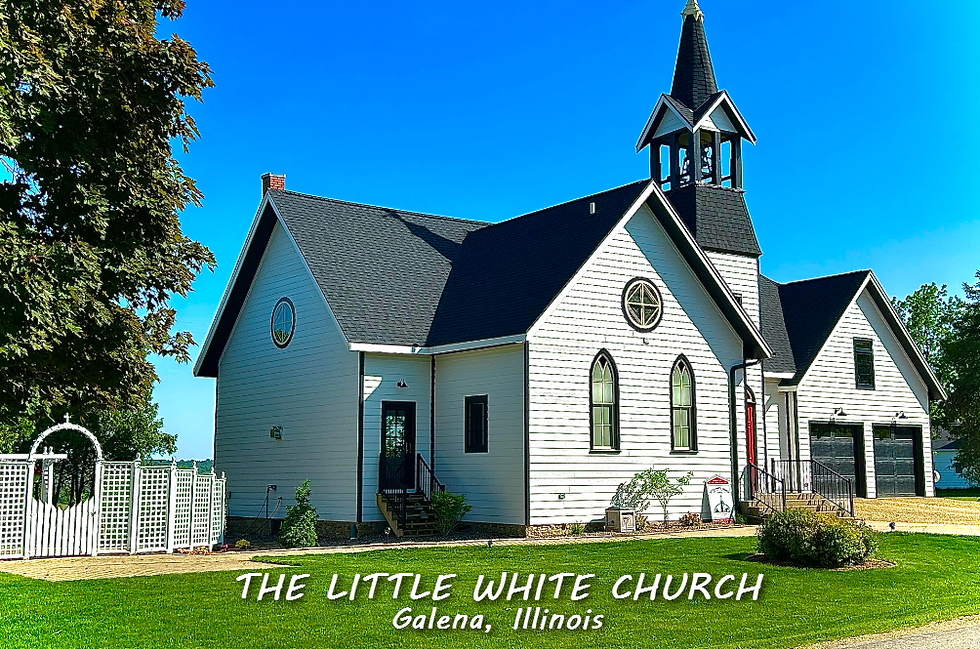
SNARE A WEEKEND, (4 GUESTS FOR $499 total) My AIRBNB outside of Galena is ready and waiting. Enjoy our unique, fully renovated church. It's an AIRBNB guest favorite with 5-star reviews. Warm and cozy, even in the winter. Minutes from Galena. Call or text Carolyn at 563-676-3320 for details about this very special deal. https://www.littlewhitechurchgalena.com/
TIME TO PAY UP...
That sets up an extended period of below normal temperatures where we are forced to pay the piper for our good fortunes the first half of January. Take a look at this 500mb upper air animation for the period January 20th to the 30th. What you consistently see on the EURO is a ridge in red focused from Alaska to the Pacific Northwest. It's bringing numerous lobes of cold air into the nation with a broad trough downstream. Energy rotates through the base of the trough as it reloads from time to time.

With the NAO and PNA negative in unison, that should promote an active storm track and a flurry of disturbances that could lead to snow over the northern half of the country. It remains to be seen if any of these can amplify into a significant storm, but it is the type of structure that could do it. At the very least, light events seem to be a good bet during that period. The EURO ensemble mean, comprised of an average of 51 members, shows this for snow potential. This is at a 10:1 ration and with the cold that looks likely much of this could be 15:1 or higher ratios which would tend to increase the amounts shown.

In fact, the operational EURO (a single run) shows what could happen when higher ratios are taken into consideration for the same 15-day period. Now, before you dust off the shovel or snow blower, please understand this is not a forecast, just a trend that encompasses 2 weeks. Shifts in the storm track or intensity of systems will inevitably happen. The operational run below is a hot one, but not an ensemble. In other words, the ensemble above has slightly different inputs in each of its 51 members. If you looked at them individually, you might see one that has 12 inches in a given spot and another with 2 inches in the same location. The average of all the 51 potential solutions typically gives you a much more realistic picture of what could happen over 14 days. As you get closer to a given event, the spread goes down and the models can tighten up on amounts (higher or lower) until the operational run can take over in the last 24–48 hours. At least for now, several inches of snow is a possibility.

I will wrap this up by saying there is a bunch going on weatherwise with cold, snow, or both possible on a regular basis the next 10–14 days. I'm looking forward to seeing how it all plays out, and you can rest assured, I'll have my nose deep in it to keep you up to date. Roll weather...TS


Comments